Using Shared Sanitary Facilities Comfortably on a Family Stay
Shared sanitary facilities can make a family camping stay feel easier once everyone knows where to go, what to carry, and how to leave the space ready for the next person. The first morning is often the awkward one: a child needs the toilet urgently, someone has forgotten a towel, and the shower bag is still back at the cabin or motorhome. A little preparation turns those small problems into a manageable routine.
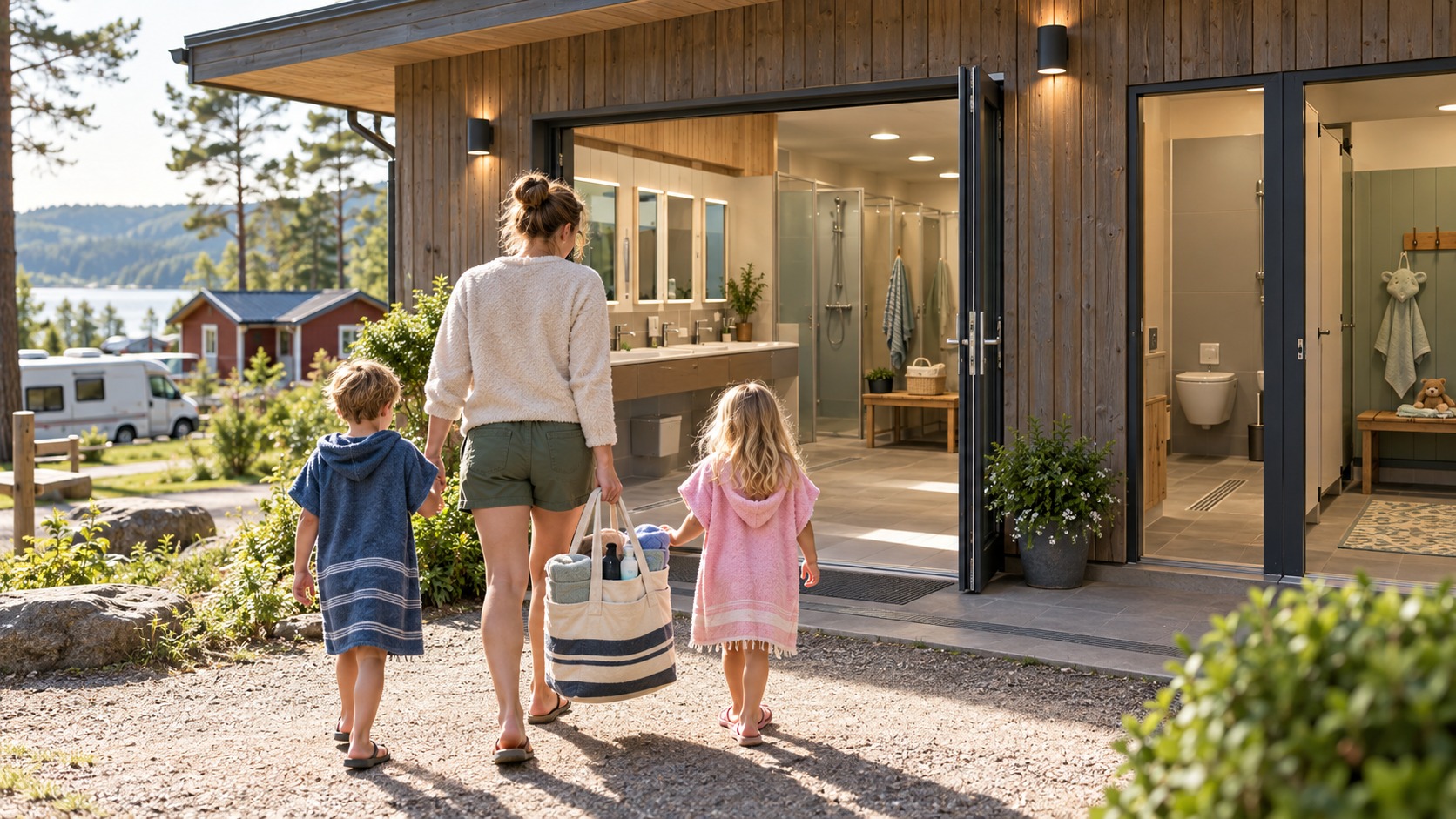
Before the family settles in, find the nearest sanitary building and check where the toilets, showers, and changing areas are. The campsite has three sanitary buildings with toilets and showers, including cubicles and separate rooms. The site also lists a baby changing room, an accessible bathroom and a waste disposal facility. Knowing which space suits your family can save a hurried search later.
Access to the sanitary facilities is through a card issued at check-in. Put it somewhere adults can reach quickly, and agree on who will carry it during trips to the bathroom. If a child is old enough to go independently, make sure they understand how access works and what to do if they cannot get back in. Check any posted instructions on arrival, since arrangements for particular rooms may differ.
A small, dedicated wash bag keeps essentials together and reduces journeys back for forgotten items. Pack according to your family’s needs, but a useful starting point is:
Choose a bag you can hang or set down without spreading everything across a shared surface. Separate dry clothes from wet towels inside it. For a longer stay, restock the bag after each use, while it is still clear what has run out. Even a simple check for clean underwear and a dry towel prevents a lot of morning friction.
Children often need more time and help in an unfamiliar bathroom. Before leaving your accommodation, decide whether everyone is washing together or taking turns. That choice depends on the children’s ages, their need for supervision and which rooms are available. A separate room may be more comfortable when helping a young child wash or change; a cubicle can work well for someone who manages their own shower.
For example, if one adult is helping a toddler while an older child can shower independently, taking turns may leave everyone less crowded. The adult can focus on the toddler’s clothes and footing while the older child uses an appropriate cubicle nearby. Agree on a clear meeting place before anyone separates, and supervise children according to their age and abilities.
Keep instructions to children practical: place clean clothes where they will stay dry, use only the space needed, and check for belongings before leaving. Children may find a shared bathroom noisy or unfamiliar. Explaining the sequence beforehand shower, dry off, dress, then return together can help them know what to expect without rushing them.
A single bathroom schedule rarely suits an entire holiday. Washing after a day outdoors may make evenings simpler, while a morning shower may suit a child who wakes early. If facilities are busy when you visit, consider shifting a flexible shower to another time. Toilet trips are less flexible, so help younger children go before setting out for an activity rather than waiting until the last moment.
Build enough time into the routine for walking to the building, changing, and gathering belongings. This matters especially when several people share one bag or an adult must help more than one child. If the family is returning wet or muddy, bring the clean clothes along instead of expecting everyone to walk back in damp clothing.
Comfort also comes from keeping expectations realistic. A quick rinse may be enough after an ordinary day; washing hair, bathing a small child, and sorting laundry will take longer. Splitting those tasks across different trips can be easier than trying to do everything during one crowded visit.
For more detailed information on this topic, read our guide on Why Cabin Camping Is a Smart Choice for a Comfortable Family Getaway.
Shared facilities work best when each visitor leaves them ready for the next family. Keep toiletries and clothing within your own area, wipe up any water you can reasonably deal with, and take all rubbish and personal items away. If something needs staff attention, follow the site’s usual way of reporting it rather than leaving the issue for the next guest to discover.
Give other guests room to use sinks, mirrors and changing space. It is easy for a family’s bags and towels to spread out, particularly while helping children dress. Packing items as soon as they are used keeps the area easier to navigate for everyone, including people who need more space to move. If a designated accessible bathroom or baby changing room is needed, use it for its intended purpose and leave it available promptly when you are finished.
Shared sanitary facilities do not require a rigid holiday timetable. Learn the layout and access system, keep essentials together, and adjust washing times to the children and the day’s plans. With those basics settled, bathroom trips become a routine part of the stay rather than a recurring interruption.